A relationship with the living world and the world within.
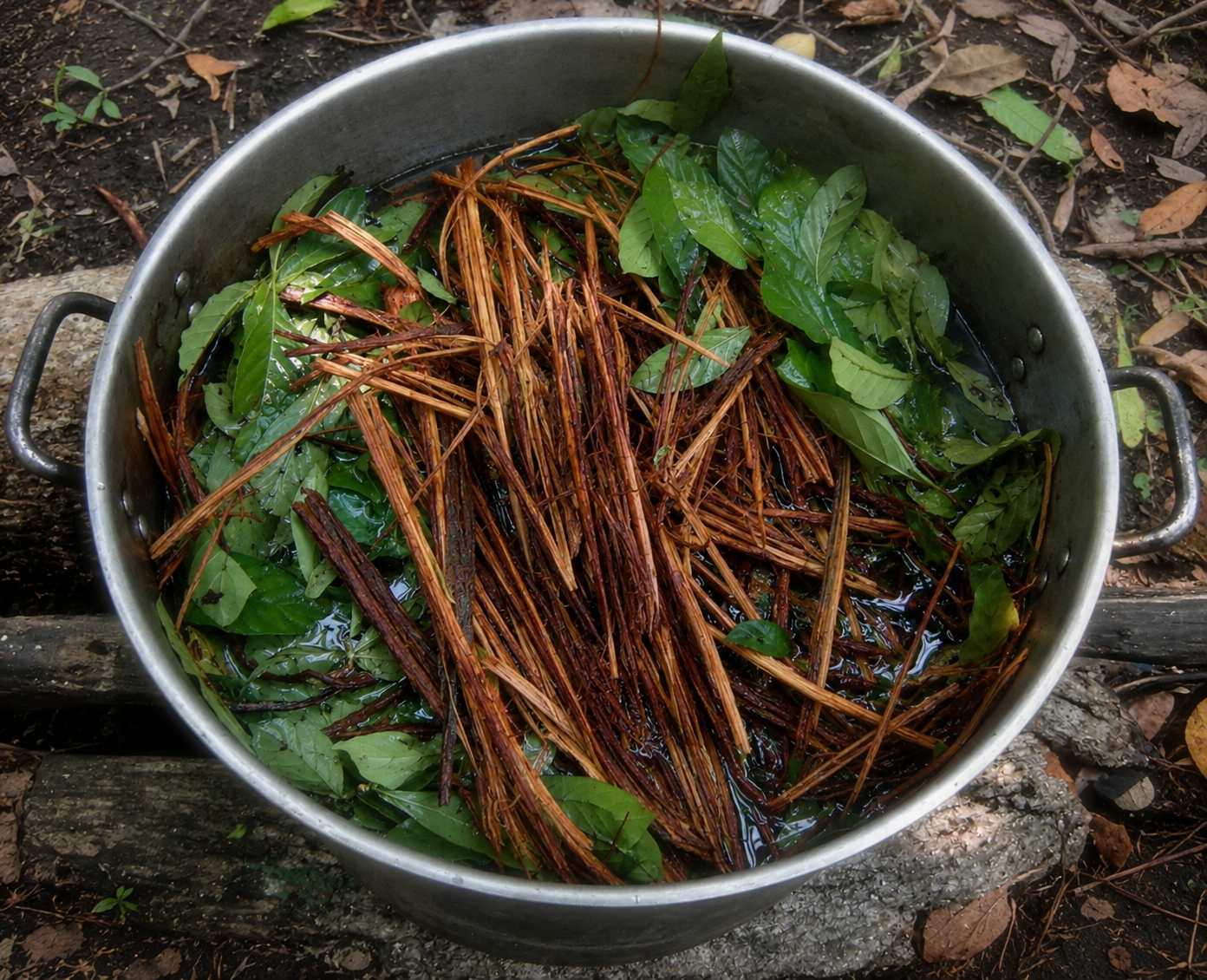
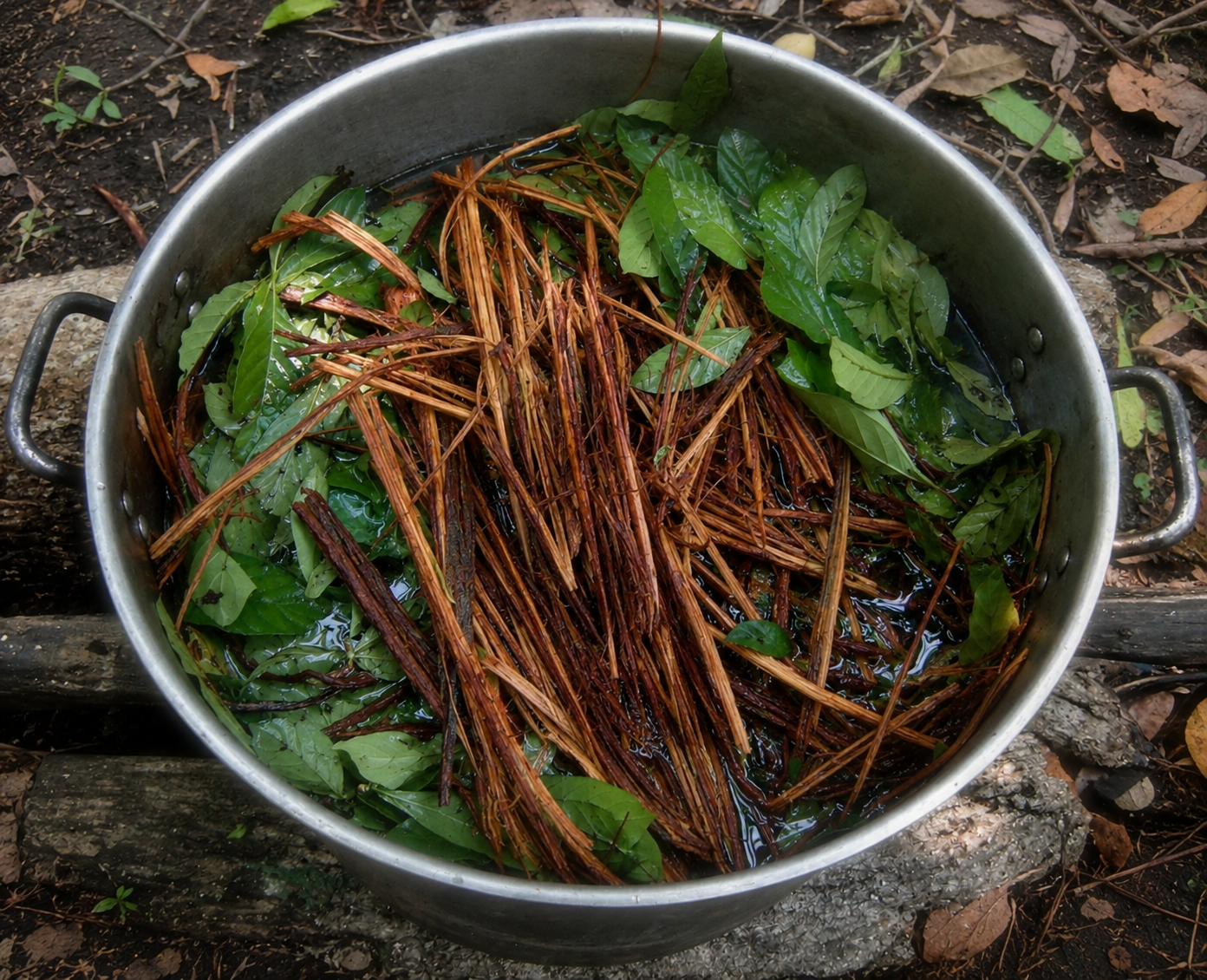
Ayahuasca is a psychoactive plant preparation rooted in Indigenous traditions of the Amazon. Many preparations combine the Banisteriopsis caapi vine with a DMT-containing plant, such as Psychotria viridis. The vine contains compounds that inhibit monoamine oxidase, allowing orally consumed DMT to become active. Preparations and traditions vary.
Within our practice, ayahuasca is approached as a sacrament of relationship: with ourselves, our community, the natural world, and the sacred as each person understands it.
Ceremony creates space to listen, reflect, and encounter emotions or patterns that may have remained outside everyday awareness. We approach this work with respect for the Indigenous peoples, knowledge, and living traditions from which it comes.
An ayahuasca ceremony generally unfolds over several hours and may involve imagery, memories, emotional intensity, and altered perception. Experiences may feel tender, challenging, confusing, or deeply meaningful.
Nausea, vomiting, and diarrhea can occur. Some traditions understand these experiences as purging, but physical distress still deserves attention and should never be dismissed as spiritually necessary. Integration offers time to reflect without rushing to interpret every image or sensation.
A small randomized trial reported short-term improvements in depression symptoms after ayahuasca. Research remains limited, and findings from a specific clinical preparation and setting do not predict individual outcomes in ceremony.
Ayahuasca's monoamine oxidase-inhibiting compounds can cause dangerous interactions with certain medications and substances. Cardiovascular and psychiatric histories also require careful review. Preparation instructions must be individualized; medications should never be stopped or tapered without guidance from the prescribing clinician.
Explore whether our practice aligns with your intentions and learn what preparation and participation involve.
At The Illuminating Collective, communion begins with preparation and continues through integration. Each sacrament has distinct effects, risks, and requirements. Participation depends on individual screening and suitability; no experience or outcome is guaranteed.
Our ceremonies are religious practices. Clinical research discussed on these pages is offered for education and does not establish the effectiveness of our ceremonies as medical treatment. Spiritual care can complement ongoing professional care, and participants should remain connected with appropriate medical and mental health support.
Share your complete health history, medications, supplements, and substance use during screening. Do not change prescribed medications on your own.
.svg)